

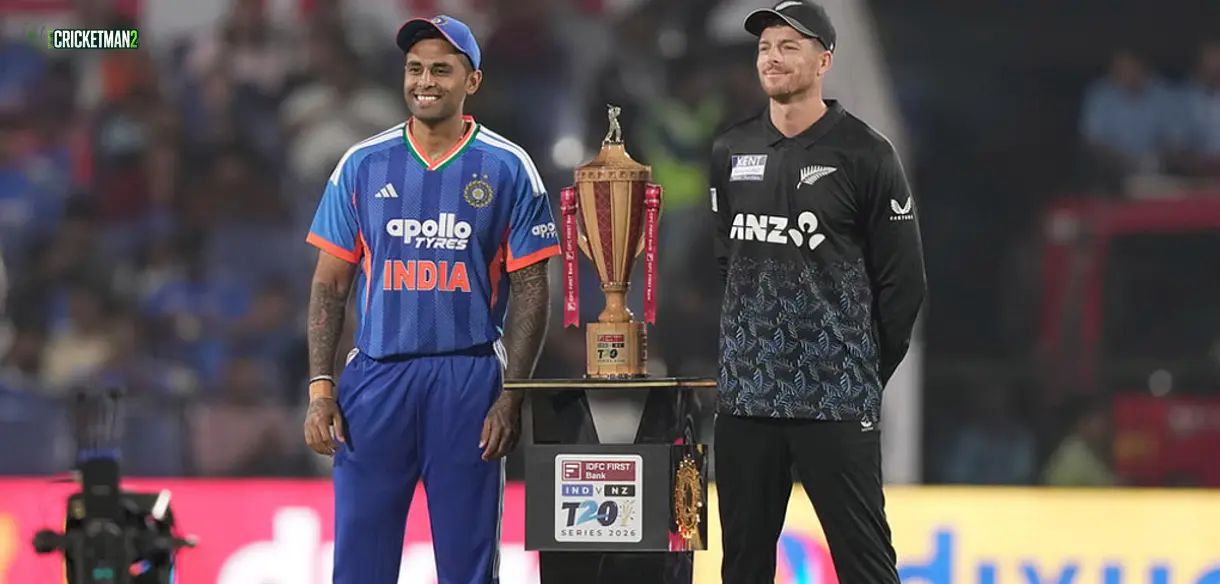
The Board of Control for Cricket in India has taken a meaningful step toward sustainability by introducing an eco-friendly trophy for the India vs New Zealand T20I series. Instead of traditional materials, the trophy has been crafted using recycled cricket bats and balls, turning retired playing equipment into a symbol of environmental responsibility.
This initiative has been developed in collaboration with IDFC First Bank and reflects the growing focus on sustainability in Indian sport. By reusing old bats and leather from worn-out balls, the board aims to reduce waste while keeping the spirit of cricket alive in a creative way.
A Trophy with a Green Message
Unlike conventional trophies, this one tells a story. The wooden elements are shaped from discarded bats, while the leather sections come from used cricket balls. The idea is simple but powerful reuse, recycle, and respect the environment.
BCCI officials explained that the project is meant to inspire players, fans, and future tournaments to think differently about sustainability. The trophy was first unveiled during the opening T20I, where both captains posed with it before the match, drawing praise across social media.
India vs New Zealand T20I Series Details
The five-match T20I series is part of preparations for the ICC Men’s T20 World Cup 2026 and is being played across multiple Indian cities.
| Match | Date | Venue |
|---|---|---|
| 1st T20I | 21 January 2026 | Nagpur |
| 2nd T20I | 23 January 2026 | Raipur |
| 3rd T20I | 25 January 2026 | Guwahati |
| 4th T20I | 28 January 2026 | Visakhapatnam |
| 5th T20I | 31 January 2026 | Thiruvananthapuram |
- Captains: India – Suryakumar Yadav | New Zealand – Mitchell Santner
- Series Context: Final international preparation before the T20 World Cup 2026
Also see: India vs New Zealand 1st T20I: India Seal Dominant 48-Run Win in Nagpur
Why This Initiative Matters
Cricket is followed by millions, and even small changes can create a big impact. By choosing recycled materials for a high-profile trophy, the board has sent a clear message that sport and sustainability can go hand in hand.
Fans have welcomed the move, calling it a perfect blend of tradition and responsibility. Many believe this could set a trend for future bilateral series and even ICC tournaments.
This recycled trophy may well become one of the most memorable aspects of the series — not just for who wins it, but for what it represents. It shows that cricket’s biggest institutions are ready to think beyond the boundary rope and contribute to a greener future.