

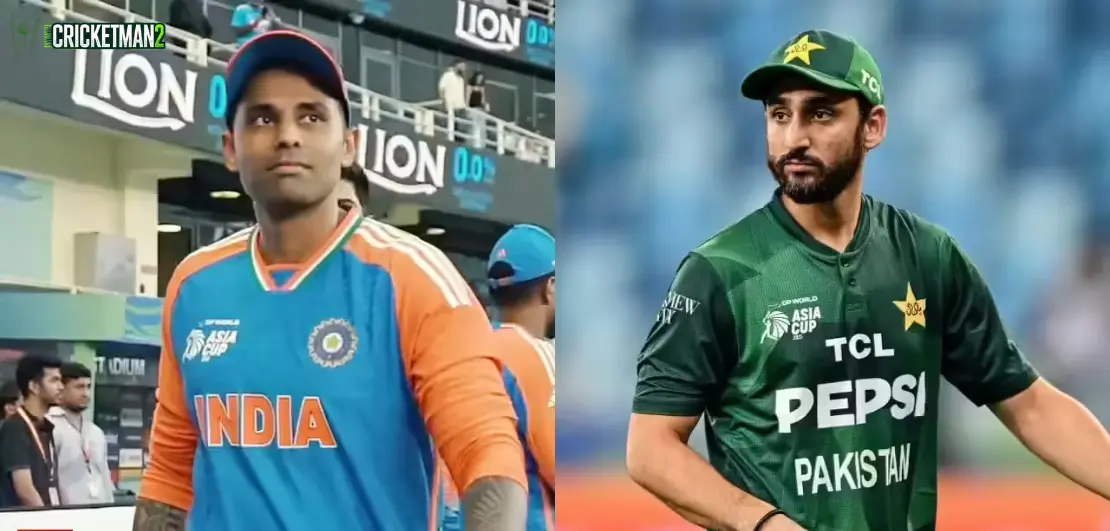
With the T20 World Cup starting this Saturday, cricket fans were expecting excitement and big matches. Instead, the spotlight has shifted to controversy. Tensions between India and Pakistan have once again taken center stage, following Pakistan’s decision to boycott their group match against India. In the middle of this storm, Pakistan captain Salman Agha made a sharp remark about India’s star batter Suryakumar Yadav, calling him “irrelevant” in the ongoing debate.
Why Pakistan Decided to Boycott the India Match
Pakistan was placed in the same group as India for the T20 World Cup. However, just days before the tournament, Pakistan announced that they would not play against India.
The reason given was that the Board of Control for Cricket in India supported replacing Bangladesh with Scotland in the tournament structure. Pakistan felt this decision was unfair and claimed it went against sporting spirit.
Although Pakistan later confirmed participation in the World Cup, they made it clear that the match against India would be skipped as a sign of solidarity with Bangladesh.
Salman Agha Reacts to India’s No-Handshake Stance
The tension between the two teams did not start today. It goes back to the Asia Cup 2025, where India and Pakistan faced each other three times. On each occasion, Indian players chose not to shake hands with Pakistan players.
This decision was linked to the Pahalgam terror attack that took place in April last year. While India stood firm on its stance, Pakistan took strong offense.
During a pre-match press conference, Salman Agha was asked about this issue. His response was blunt and emotional.
“We are not hurt, but it is not good for the game. We are role models, and kids are watching us,” he said.
How Suryakumar Yadav Became Part of the Controversy
Suryakumar Yadav was seen as the face of India’s no-handshake stance during the Asia Cup. Pakistan players felt the gesture crossed a line and showed disrespect.
This moment became a turning point. Pakistan even threatened to boycott another Asia Cup match, though they later changed their decision and played.
The Pakistan Cricket Board then approached the International Cricket Council, requesting action against India. However, the ICC did not support Pakistan’s complaint.
Hybrid Model Agreement and PCB’s U-Turn
Earlier, a hybrid hosting agreement was signed between the ICC, BCCI, and the Pakistan Cricket Board.
Key Points of the Agreement:
- India would not travel to Pakistan
- Pakistan would not travel to India
- Matches involving both teams would be played at neutral venues
However, Pakistan backing out of the India match at the last moment broke this understanding. To make matters worse, the PCB reportedly did not submit a formal written notice to the ICC about its final decision.
Possible Punishments Pakistan Could Face
If Pakistan officially refuses to play against India, the consequences could be serious. The ICC is expected to take a tough stance.
Potential Penalties (Overview Table)
| Area | Possible Impact |
|---|---|
| World Cup Participation | Risk of suspension from future ICC events |
| ICC Revenue Share | Heavy financial losses |
| PSL Tournament | Foreign players may be barred |
| Broadcasters | Compensation claims |
| Sri Lanka Cricket | Financial loss recovery from PCB |
Without an India-Pakistan match, broadcasters and host boards stand to lose massive revenue, and the PCB may be forced to compensate them.
An India vs Pakistan match is the biggest attraction in world cricket. Its absence not only affects fans but also damages the commercial value of the tournament.
With the World Cup just days away, the ICC now faces pressure to protect the tournament’s integrity while handling one of cricket’s most sensitive rivalries.
Instead of focusing on cricket, the build-up to the T20 World Cup has been overshadowed by politics, old wounds, and strong statements. Salman Agha’s comments on Suryakumar Yadav have added fuel to an already heated situation.
Whether Pakistan goes ahead with the boycott or backs down at the last moment remains to be seen—but the fallout could reshape international cricket relations for years to come.