

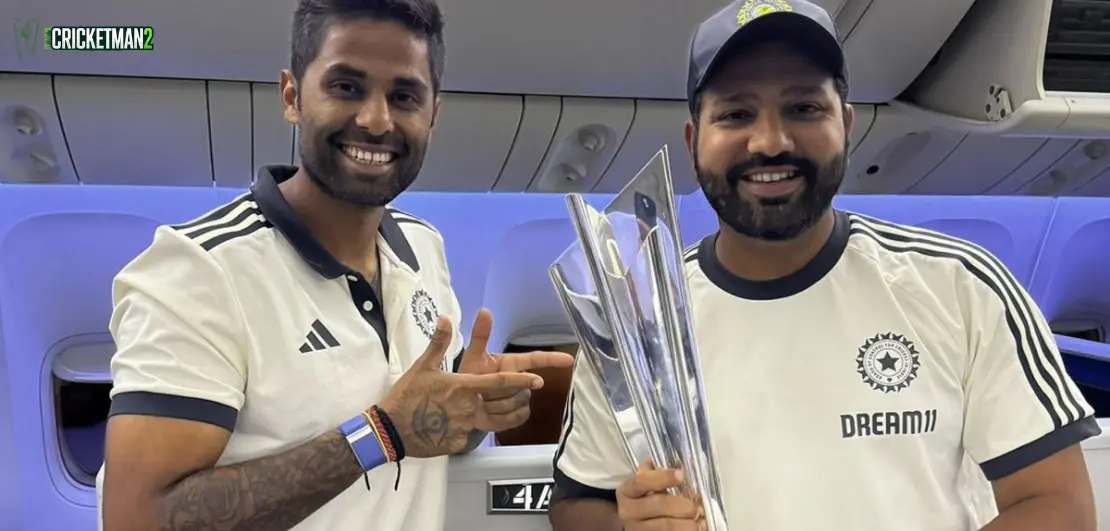
Suryakumar Yadav becoming India’s T20I captain after the 2024 T20 World Cup was one of the biggest leadership decisions in recent Indian cricket. Many fans believed the decision came from Gautam Gambhir, but later it became clear that the call was taken by a small group of senior figures in Indian cricket.
The leadership decision involved Rohit Sharma, Jay Shah, Ajit Agarkar, and Rahul Dravid, who together decided that Suryakumar Yadav should lead India in T20 internationals.
Leadership Changes After the 2024 T20 World Cup
After India won the T20 World Cup in Barbados in 2024, the team went through several major changes.
Rohit Sharma announced his retirement from T20 internationals. Soon after, Virat Kohli and Ravindra Jadeja also stepped away from the format. With several senior players leaving, the team needed a new captain for the T20 format.
Many people expected Hardik Pandya to take over the role because he had already led India in several T20 matches and was part of the World Cup-winning team. However, the selectors and team management decided to go in a different direction.
Who Actually Decided SKY’s Captaincy
Suryakumar Yadav later revealed that the decision to appoint him as captain came from a small leadership group within Indian cricket.
Key Decision Makers
| Person | Role at the Time |
|---|---|
| Rohit Sharma | India’s T20 captain before retirement |
| Jay Shah | BCCI Secretary |
| Ajit Agarkar | Chief Selector |
| Rahul Dravid | Head Coach |
This group discussed the future leadership of the T20 team and agreed that Suryakumar Yadav should take over the captaincy.
Gautam Gambhir was not involved in the main decision, even though some fans believed he played a role due to his previous association with Suryakumar Yadav during their time at Kolkata Knight Riders.
Also See : Ravindra Jadeja Expected to Play Key Role for Rajasthan Royals in IPL 2026
How SKY Learned About the Decision
Suryakumar Yadav explained that he received the news through a phone call from Jay Shah just a few days before India’s T20I series against Sri Lanka.
The conversation happened around three or four days before the series. During the call, Jay Shah informed him that the management had decided to make him the captain of India’s T20 team going forward.
According to SKY, he had already sensed that discussions had taken place between Rohit Sharma, Ajit Agarkar, and Jay Shah before the official announcement.
Suryakumar Yadav’s Record as T20I Captain
Since taking over the captaincy, Suryakumar Yadav has enjoyed strong success with the Indian team in T20 internationals.
India has performed consistently under his leadership in both bilateral series and major tournaments.
SKY Captaincy Record
| Metric | Value |
|---|---|
| Matches in first phase as captain | 52 |
| Wins | 42 |
| Win percentage | Over 80% |
| Bilateral series record | Unbeaten |
| Major achievement | T20 World Cup title defense in 2026 |
Under SKY’s captaincy, India also won several important bilateral series in countries like Sri Lanka, South Africa, and Australia. The team also achieved success in regional tournaments such as the Asia Cup.
A Leadership Decision That Surprised Many
The decision to appoint Suryakumar Yadav as captain surprised many fans because he was not even the vice-captain at the time.
Hardik Pandya appeared to be the natural choice based on experience. However, the management believed that SKY’s aggressive style, positive attitude, and ability to lead from the front made him the right option.
So far, the decision has proven successful as India has continued to perform strongly in T20 cricket.
What This Means for Indian Cricket
Suryakumar Yadav’s captaincy story shows that leadership decisions in cricket often come from discussions between several people in the management group.
With support from senior figures like Rohit Sharma and Rahul Dravid, SKY has built a strong record as India’s T20 captain and helped maintain the team’s dominance in the shortest format.
His early success suggests that India may continue with him as their T20 leader for the coming years.