

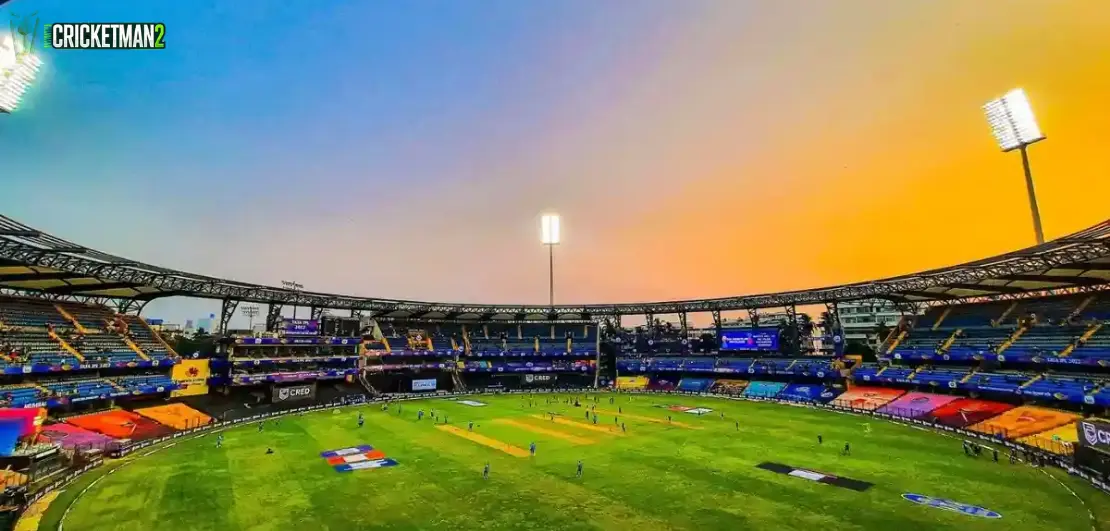
As India return to the Wankhede Stadium in Mumbai for another T20 World Cup semi-final, old memories from 2016 still remain fresh. That night against West Indies is remembered not just for the result, but for the dramatic catches, no-balls, and missed chances that changed the match.
Now, ahead of the 2026 semi-final against England, the focus is again on fielding standards and handling pressure in big games.
The 2016 Semi-Final: A Night of Drama at Wankhede
On March 31, 2016, India faced West Indies in a T20 World Cup semi-final at Wankhede. India had posted a strong total of 192 runs, powered by Virat Kohli’s unbeaten 89. It looked like a winning score.
But what followed turned the game around.
Three Catches, Three Reprieves
All three incidents involved Lendl Simmons.
| Over | Bowler | What Happened | Result |
|---|---|---|---|
| Early Over | R Ashwin | Simmons edged and was caught | Declared no-ball |
| 15th Over | Hardik Pandya | Catch taken by Ashwin | Declared no-ball |
| 18th Over | Jasprit Bumrah | Catch taken by Jadeja | Ruled six (boundary touch) |
Each time India celebrated a wicket, only for it to be overturned.
- The first two were called back because of no-balls.
- The third was ruled a six, as the fielder touched the boundary rope.
Simmons went on to score 82 runs, leading West Indies to victory.
India had the chances, but they slipped away.
The Role of Dew and Six-Hitting
Fielding was not the only issue that night.
The heavy dew made bowling difficult. West Indies also dominated in power-hitting.
Six-Hitting Comparison (2016 Semi-Final)
| Team | Sixes Hit |
|---|---|
| India | 3 |
| West Indies | 11 |
Simmons and Andre Russell cleared the boundary with ease. India’s batting was strong in skill but lacked big six-hitting power that night.
What Has Changed in 2026?
India’s power-hitting has improved massively.
In the ongoing T20 World Cup:
| Team | Sixes in Tournament | Rate |
|---|---|---|
| India | 69 in 7 matches | 1 every 2 overs |
| West Indies | 76 | 1 every 10.71 balls |
India are among the top power-hitting teams this year. The batting is aggressive and consistent.
But fielding remains a concern.
Fielding Concerns in 2026
In a recent match at Eden Gardens, Abhishek Sharma dropped two simple catches. It raised fresh questions about India’s catching standards.
India’s Catching Record in This World Cup
| Category | Record |
|---|---|
| Total Catches Taken | 33 |
| Catches Dropped | 13 |
| Success Rate | 71.7% |
| Overall Rank | 15th out of 20 teams |
Among the Super Eight teams, India have the lowest catching efficiency.
In comparison:
| Team | Catching Efficiency |
|---|---|
| England | 87% (Best among Super Eight teams) |
This difference could be important in a high-pressure semi-final.
Can India Fix It in Time?
Former fielding coach R Sridhar believes India cannot ignore the issue. While the team has strong batting and world-class bowling led by Jasprit Bumrah, poor fielding can hurt badly on a crucial night.
India have the ability to cover up small mistakes because of their powerful batting and quality bowling. But in knockout matches, even one dropped catch can decide the result.
The team now has a chance to prove themselves on the big stage at Wankhede.
The Big Question Before the Semi-Final
India have:
- Strong power-hitting
- A dangerous bowling attack
- Big-match experience
But they must improve:
- Catching efficiency
- On-field alertness
- Handling pressure moments
Wankhede has seen heartbreak before. Now it offers redemption.
If India bring their best fielding performance along with strong batting and bowling, they can move one step closer to the T20 World Cup 2026 final.
Read more: Wankhede Stadium Records & Stats in Test, ODI, T20I – Mumbai, India Venue
Conclusion
Catches may not always win matches alone, but dropped chances can definitely lose them. The 2016 semi-final proved how small mistakes can change history.
As India prepare for another big night at Wankhede, the team knows that every catch, every step near the boundary, and every no-ball check could matter.
This semi-final is not just about runs and wickets. It is about learning from the past and performing under pressure.